Freedom in a World of Want

M. Andrew McConnell • February 27, 2024

In a world inundated with consumerism, Socrates's profound observation, “How much there is in the world I do not want,” resonates more powerfully than ever. This sentiment was echoed in a recent conversation over coffee with a friend, where we delved into the concept of 'freedom' and its implications in our lives.


The Essence of Freedom


Our discussion began with personal anecdotes. I shared my experience of moving to Bermuda, a decision that epitomized my freedom to choose my life's path. Similarly, we reflected on the luxury of taking time in the middle of a busy day to engage in a meaningful conversation, free from the constant vigilance of our inboxes or the tyranny of the ticking clock. This freedom, we acknowledged, stemmed partly from privilege – a privilege we had actively worked to build through deliberate choices and actions.


My friend then shared the societal pressures he faces constantly, encapsulated in the relentless suggestions to upscale his lifestyle: joining exclusive clubs, enrolling his children in prestigious schools, living in certain neighborhoods, driving luxury cars, and staying at high-end hotels. This barrage of expectations highlighted a stark reality: our society often equates increased expenditure with enhanced status and happiness.


However, my friend found his sense of freedom not in the accumulation of wealth or possessions but in his ability to minimize fixed expenses. By consciously reducing financial obligations, he had crafted a life that prioritized freedom over material accumulation. This approach resonated with me and echoed the wisdom of Lao Tzu: “Need little, want less.”


The Consumer Culture Trap


Our conversation then shifted to the broader societal context – the consumer culture that engulfs us. Billions, perhaps trillions, are spent on advertising, subtly coaxing us into believing that happiness and fulfillment lie in the next purchase. This relentless push to want more, even things we never knew we needed, comes at a significant cost to our freedom – the freedom to pursue what genuinely fulfills us.


Wanting is an innate response, especially in an environment that constantly exposes us to new desires. However, this natural tendency comes with a price. It often leads to a cycle of endless pursuit, where satisfaction remains perpetually out of reach, and true freedom – the freedom to enjoy life's simple pleasures and make choices unencumbered by financial burdens – becomes a distant dream.


Reflecting on the wisdom of Socrates and Lao Tzu, it becomes evident that true freedom lies in the ability to discern between want and need. It's about recognizing that the relentless pursuit of material possessions often leads to a paradox: the more we acquire, the less free we become.


Every time we face the temptation to acquire something new, it's crucial to pause and reflect. Have we lived happily without this item so far? Is the cost of acquiring it – not just in monetary terms but in terms of our freedom – truly worth it? The act of clicking 'buy now' might seem liberating in the moment, but it's essential to consider whether this fleeting satisfaction is worth the long-term cost to our freedom.


The path to true freedom involves making conscious choices. It's about understanding that while we can't escape the consumer culture, we can choose how deeply we engage with it. It's about realizing that happiness and fulfillment often lie in experiences, relationships, and personal growth, rather than in the accumulation of material possessions.


The journey towards contentment and freedom is a personal one. It requires introspection and a willingness to challenge societal norms. It's about finding joy in simplicity and understanding that our worth is not defined by what we own but instead by who we are and the quality of our experiences.


The pursuit of freedom in a world driven by desire is a complex but rewarding journey. It involves understanding the difference between want and need, recognizing the traps of consumer culture, and making conscious choices that prioritize our true happiness and freedom. As we navigate this path in our modern world, let us remember the ancient wisdom of Socrates and Lao Tzu, and strive to find fulfillment in the richness of our experiences rather than in the accumulation of possessions. After all, the greatest freedom lies in the ability to live a life unburdened by unnecessary wants, a life where we can truly be present and enjoy the moments that matter most.


By M. Andrew McConnell May 5, 2026
A friend recently told me, with the kind of finality usually reserved for breakups, that he had stopped speaking to his college roommate, and one of his best friends for the past twenty years. The reason was political. I asked him what, specifically, had changed. Not what his old roommate had said online, but what either of them had actually done about the issue in question over the past year. He thought about it for a while. Then he changed the subject. I have been thinking about that conversation ever since, because I do not think he is alone. We are living through a strange moment where people are willing to detonate decades of friendship over positions they hold strongly but act on almost not at all. And I want to suggest that before you do the same, you owe it to yourself to ask a harder question than "do we agree?" The harder question is: what was this friendship actually built on in the first place? Show Me Your Calendar In Get Out of My Head , I wrote about a concept I called zero-based calendaring. The premise is simple. If you want to know what someone actually values, do not ask them. Look at where they spend their time. Show me your calendar, and I will show you your priorities. The same logic applies to friendships. If you sit down and honestly map out the hours, days, and years you spent with someone, what was actually in those hours? Was it a shared political position? Almost certainly not. It was probably some combination of late nights in a dorm room, weddings and funerals you stood through together, kids who grew up calling each other cousins, inside jokes nobody else would understand, a hundred small acts of showing up when showing up was hard. Then a thing happens in the news. A post is made. A position is taken. And suddenly all of that is on the table to be thrown out. Before you throw it out, run the audit honestly. What percentage of the actual lived experience of that friendship was tied to the thing you now disagree on? For most people, if they are willing to be honest, the answer is close to zero. The Value-Action Gap There is a concept I keep returning to that Tim Ferriss puts well: "If learning was enough, we would all have six-pack abs." Knowing is not doing. Reading is not doing. Posting is not doing. Most of the issues that are currently breaking friendships apart are issues that, for the people doing the breaking, occupy a vanishingly small share of their actual day-to-day life. They read about it. They post about it. They argue about it at dinner parties. But if you audited their calendar, the way I audit my own, you would find that less than one percent of their time, in actions rather than words, is spent doing anything at all about the issue in question. Meanwhile, the other ninety-nine percent of their day, the part filled with raising kids, doing work, exercising, cooking dinner, calling their mother, showing up for the people in front of them — that part still looks remarkably similar to the calendar of the friend they are about to cut off. This is the gap worth sitting with. If the thing you disagree on consumes less than one percent of either of your lives in actual action, and the other ninety-nine percent of how you both spend your days still aligns, what exactly are you torching the friendship over? You are torching it over the talking, not the doing. The Process Was the Friendship I have written before about how, in almost every domain that matters, the process is the result. We tend to think of friendships the way we think of finish lines — the relationship is the thing we have, a possession, a status. But a friendship is not a thing you have. It is a thing you do. It is the accumulated process of two people choosing each other, in small ways, over a long time. When you cut someone off, you are not just ending a relationship. You are deleting the process. You are deciding that the next twenty years of small choosings will not happen, and the previous twenty no longer count for what they were. That is an enormous thing to trade for the brief dopamine hit of moral clarity. "Someday" Is the Hole You Are Digging Now Bonnie Ware, in The Top Five Regrets of the Dying, found that one of the most common deathbed regrets was losing touch with friends. Not arguing with friends. Not disagreeing with friends. Losing them. Letting the relationship slip away through inattention or, worse, through a cleanly justified decision that felt right at the time and felt empty later. I am not saying everyone in your life deserves to stay in your life. Some relationships are genuinely corrosive. Some disagreements are not about issues at all but about character revealed, and character is worth taking seriously. There are people you should walk away from, and walking away is the right move. But "this person voted differently than I did" is almost never that. "This person posted a take I found offensive" is almost never that. And the test for whether you are in the rare category that justifies the loss is not how strongly you feel in the moment. It is whether, a year from now, five years from now, on whatever your version of a deathbed turns out to be, you will look back at the hole this person used to fill and feel relief or regret. A Different Question to Ask Before you cut someone off, try this. Sit down with a piece of paper and write down every meaningful thing you have done together. Every trip, every dinner, every late-night conversation, every moment of being there when it counted. Then, on the same piece of paper, write down the things you actually do, in your daily life, in service of the issue that is now driving you apart. Not the things you read. Not the things you post. The things you do. If the second list is meaningfully shorter than the first, you have your answer. You do not have to agree with someone on everything to share a life with them. You probably do not even agree with yourself on everything, if you are honest about how your views have shifted over the years. The friends worth keeping are rarely the ones who match your current positions exactly. They are the ones whose actual lives, the calendar version, still rhyme with yours.  The rest is mostly noise. And noise, however loud it gets, is a strange thing to hand your relationships over to.
By M. Andrew McConnell April 28, 2026
For roughly 199,800 of our 200,000 years on this planet, no human ever moved faster than a horse. Think about that. Across nearly the entire arc of human evolution, the upper limit of how fast a body could be hurled across the surface of the earth was set by hooves. You could not, under any circumstances, eat breakfast in London and dinner in New York. The very idea of crossing five time zones in a day would have been incoherent — like asking someone in 1450 what their Wi-Fi password was. Then, in the blink of an evolutionary eye, we built jets. And our bodies have been paying interest on that loan ever since. The Bargain We Made With Speed Jet travel is, by almost any measure, miraculous. I can hug my daughter in Bermuda in the morning and shake a client’s hand in Los Angeles by dinner. Families separated by oceans get to be families. Markets that used to take six months to enter take six hours. Ideas, goods, and people move at a pace our great-grandparents would have found indistinguishable from magic. But every frequent flyer knows the other side of the ledger. You get off the plane and your body is, quite literally, in the wrong time zone. Your circadian rhythm — a system tuned over millions of years to the rotation of a single planet — is suddenly out of sync with the sun outside your window. You can’t sleep when you should. You can’t stay awake when you need to. Your digestion is off. Your judgment is impaired (studies put a sleep-deprived, jet-lagged brain in the same cognitive ballpark as a legally drunk one). You feel, for a few days, like a slightly broken version of yourself. This is what happens when technology lets the body travel faster than evolution prepared it to travel. Here’s the thing: I think we’re now living through the cognitive version of the same story. Welcome to Mental Jet Lag For most of human history, a person could think one thought at a time, work on one problem at a time, hold one conversation at a time. Even the most brilliant polymath was bottlenecked by the simple fact that there was one of them. Now? I can have four Claude tabs open writing in parallel. An agent in the background combing through my inbox. Another summarizing a 90-page report. A research tool building me a competitor analysis while I’m on a Zoom. I can — and on a busy day, I do — carry on a dozen “conversations” with various AI systems simultaneously, each operating at a pace no human collaborator could match. The output is staggering. I get more done in a Tuesday morning than I used to get done in a week. But somewhere around 4 p.m., something happens that I didn’t expect. It’s not the familiar exhaustion of a hard day’s work. It’s a different feeling — fuzzier, more diffuse. Like my brain has just stepped off a flight from somewhere it was never meant to go. I’ve started calling this mental jet lag : the cognitive and physiological cost of operating at a pace your nervous system has not evolved to handle. And just like the airborne kind, it comes with a real bill — one most of us are paying without ever seeing the invoice. The Symptoms If you’re using AI tools heavily, see how many of these you recognize: Decision fatigue at unusual hours. You’ve made more micro-judgments by lunch — “is this output good? does this draft work? should I refine or restart?” — than you used to make in a full day. Each is small. The pile is enormous. The “fuzzy brilliance” feeling. You’re producing more, but you can’t quite remember what you produced. The work flowed through you rather than from you. A weird kind of loneliness. Hours of “conversation” without a single human voice. The social pillar of human cognition — the thing that, biologically, has kept us regulated and resilient for 200,000 years — gets quietly skipped. Compressed creative timelines that don’t actually feel creative. The marination time, the showering-and-suddenly-having-an-idea time, the “let me sleep on it” time — gone. Replaced with “let me prompt on it.” Physical signs that mimic actual jet lag. Disrupted sleep. Tension headaches. The hollow-eyed look of someone who’s been staring at screens that talk back. Elevated cortisol. The body keeps the score, even when the score is being kept by an LLM. The “infinite to-do list” effect. AI removes the friction that used to cap your ambition. The list of “things I could now do” expands faster than the list of “things I have done.” The gap is where anxiety lives. None of this is an argument against AI. I am, demonstrably, an enthusiast. But I’m also someone who spent years learning the hard way that the ability to keep going is not the same as the presence of health. We are, once again, mistaking output for vitality. We are, once again, treating biological hardware like it can be indefinitely upgraded by professional software. It can’t. What We Can Learn From Jet Lag Here’s the good news: humans are actually pretty experienced at this problem now. We’ve had about 70 years to figure out how to fly across the world and not feel like garbage when we arrive. The protocols are well-established. And almost all of them translate, with surprising precision, to the AI age. Anchor your circadian rhythm. Frequent flyers know: get sunlight at the right local hour, and your body recalibrates. The cognitive equivalent is anchoring your day in human-paced rituals that AI cannot accelerate. A morning walk before you open a single tab. A real meal at a real table. A conversation with another human being where neither of you is optimizing for tokens. These aren’t indulgences; they’re the cognitive equivalent of getting ten minutes of morning light. Hydrate and fuel the machine. Pilots will tell you that altitude dehydrates you faster than you realize. AI does something similar to your attention — it depletes a resource you didn’t know you were spending. Schedule recovery the way you schedule meetings. Treat focus like the finite, replenishable resource it actually is. Build in layovers. No serious traveler does back-to-back red-eyes for a week without consequence. Yet I know plenty of people (myself included, on bad days) who do the AI equivalent: multiple days of ten consecutive hours of high-cognition prompting with no break in between. AI has compressed to zero all the natural pauses that used to be built into knowledge work — the walk to a colleague’s desk, the wait for a reply, the time it took to actually read the thing. So the pauses now have to be put back in on purpose. Five minutes of nothing between intense AI sessions. A real lunch, away from the screen. A walk between agents. A genuine end to the workday, not “one more prompt” rolling into 10 p.m. And a weekend without any work — including the increasingly common move of “I had AI handle it over the weekend so I could relax,” which misses the point entirely. If you’ve outsourced the doing but kept the thinking-about-doing, you’ve changed nothing except who’s typing. Don’t fight the body — partner with it. The single biggest mistake jet-lagged travelers make is pretending the lag isn’t happening. They power through, crash harder, and lose three days instead of one. The same is true here. If your brain is telling you it’s foggy, it is foggy. The fix is not “one more prompt.” The fix is the same as it has always been: sleep, movement, real food, real people, real rest. Choose which trips are worth taking. This might be the most important one. Not every meeting requires a transatlantic flight. Not every task requires four parallel agents. The question worth asking, every time, is: does the speed I’m gaining here justify the lag I’ll pay later? Sometimes the honest answer is yes. A lot of times — more than we’d like to admit — it’s no. The Future Is Faster Than Today There is no version of the next decade in which we slow down. The pace of AI is not going back into the bottle, any more than commercial aviation was going to retreat to ocean liners. The future is faster than today, and the day after that will be faster still. Which means the question isn’t whether to engage. It’s whether to engage deliberately — with eyes open about what we’re trading and what we’re protecting. The frequent flyers who thrive over a long career aren’t the ones who pretend jet lag doesn’t exist. They’re the ones who respect it, plan around it, and build the recovery into the trip itself. They treat their bodies as the irreplaceable instrument that makes the whole career possible. We need to do the same thing with our minds. Because the alternative isn’t keeping up. The alternative is becoming the cautionary tale — the high-achiever who could have done anything, and instead did everything, until there was nothing left. The jet age didn’t make us superhuman. It made us travelers who had to learn new rules.  The AI age is the same. Let’s learn the rules a little faster this time.
By M. Andrew McConnell December 18, 2025
For years, I treated reading almost like a competitive sport. But entering 2025, I set a different kind of goal: I wanted to read fewer than 100 books. It sounds counterintuitive in a world that glorifies "more," but my intention was specific. I wanted less consumption and more processing; less skimming and more producing. With only a few weeks left in the year, I can happily say I succeeded. I’ve clocked in at 82 books so far, and I don’t see myself sprinting through another 18 before January 1st. The result? Even though the total count was lower, the quality of engagement was on par with—if not better than—any prior year. The books I chose this year hit harder, lingered longer, and directly influenced how I’m building my company, raising my daughter, and understanding the world. From the physics of the universe to the magic of Hogwarts, here are the books that defined my 2025. The Founder’s Mindset: Building & Creating What's Next Is Now: How to Live Future Ready by Frederik Pferdt I started the year with this book, and I am so happy I did. Pferdt challenges you to shift from "I want to do X, but..." to "I want to do X, and..." It sounds simple, but it is expansive for problem-solving. I used this framework immediately at Alively, and it triggered two new growth unlocks right out of the gate. Rebel without a Crew by Robert Rodriguez This is the story of how a 23-year-old filmmaker with $7,000 became a Hollywood player. I am in the middle of building a company, and having raised capital in the past, I realized I had become sloppy. I had been turning down money, while others told me that speed was worth the dilution. But what if it is speed in the wrong direction? This book was a masterful reminder that a lack of resources can actually be your greatest resource. It perfectly referenced where Alively is right now. Awaken Your Genius: Escape Conformity, Ignite Creativity, and Become Extraordinary by Ozan Varol I was a big fan of Varol's earlier work, Think Like a Rocket Scientist , and this did not disappoint. I had been realizing that I was doing too much consuming, and when I was creating, it felt like "content" rather than passion or art. It is ironic that I needed to consume one more book to get the kick I needed to change that, but there you have it. Stillness Is the Key by Ryan Holiday This was a timely reread. Since my goal was to read fewer books and spend more time in stillness, revisiting this felt essential. Good books are worth reading; great books like this one warrant rereading. Deep Truths: History, Society, and Science The Coddling of the American Mind by Greg Lukianoff and Jonathan Haidt Everyone (including me) was talking about Haidt's The Anxious Generation in 2024. Reading that inspired me to go back to this earlier, foundational work. It is as relevant today as when he wrote it. It identifies how we are getting in our own way as a country; people truly do come from a good place, but we are still causing damage to ourselves—and more concerningly, our children. The One: How an Ancient Idea Holds the Future of Physics by Heinrich Päs I am on a quest to get to the deeper truth behind everything. This book pairs incredibly well with Why Buddhism is True, which I have read twice (see my note on rereading above) . It explores the idea that there is a truth we can’t see—and aren't meant to see—but that doesn't make it any less real. Like with so much else, modern science is finally catching up with what the ancients realized millennia ago. Washington: A Life and Grant by Ron Chernow Two amazing men written by one amazing biographer. I am a believer in the "Superman Theory" of history—that without specific individuals shaping their present, we would not have our current reality. I truly believe we would not have our country but for Washington and Grant (along with Lincoln, of course). The Source: A Novel by James A. Michener A beautiful novel that serves as an education on the history of the Holy Land, predating the founding of three world religions. Reading this made me reflect on the Holocaust, and the innumerable atrocities committed against the Jews long before then, and the grand arc of history; it framed that tragedy as merely one dark chapter in the long history of persecution faced by God's chosen people. The Heart & The Magic My Friends by Fredrik Backman I am a sucker for any Backman book. As with every single one of his previous novels, I cried multiple times. He has a unique way of unlocking human emotion that few other authors can match. The Book of Alchemy by Suleika Jaouad I love journaling and get a lot out of it, and this book is filled with beautiful stories and prompts that I have since shared with loved ones. It’s a wonderful tool for anyone looking to go deeper into their own story. It was also my own "most gifted book" of 2025. The Harry Potter Series by J.K. Rowling I know I am late to the game! I read the first one in college but never got into it. I am so happy I waited. Talulla and I read these together this year, and it was a magical adventure and experience. I stand corrected for my assessment when I was a "know-it-all" college student; Hogwarts is wonderful reading at any age. As I look forward to 2026, I’m carrying the lessons of "less is more" with me. Whether it was the constraints of Robert Rodriguez or the stillness of Ryan Holiday, the theme of 2025 was about clearing space to let the important things land. Here’s to another year of reading deeply, thinking clearly, and finding the magic—whether in a history book or at Hogwarts.
By Andrew McConnell October 21, 2025
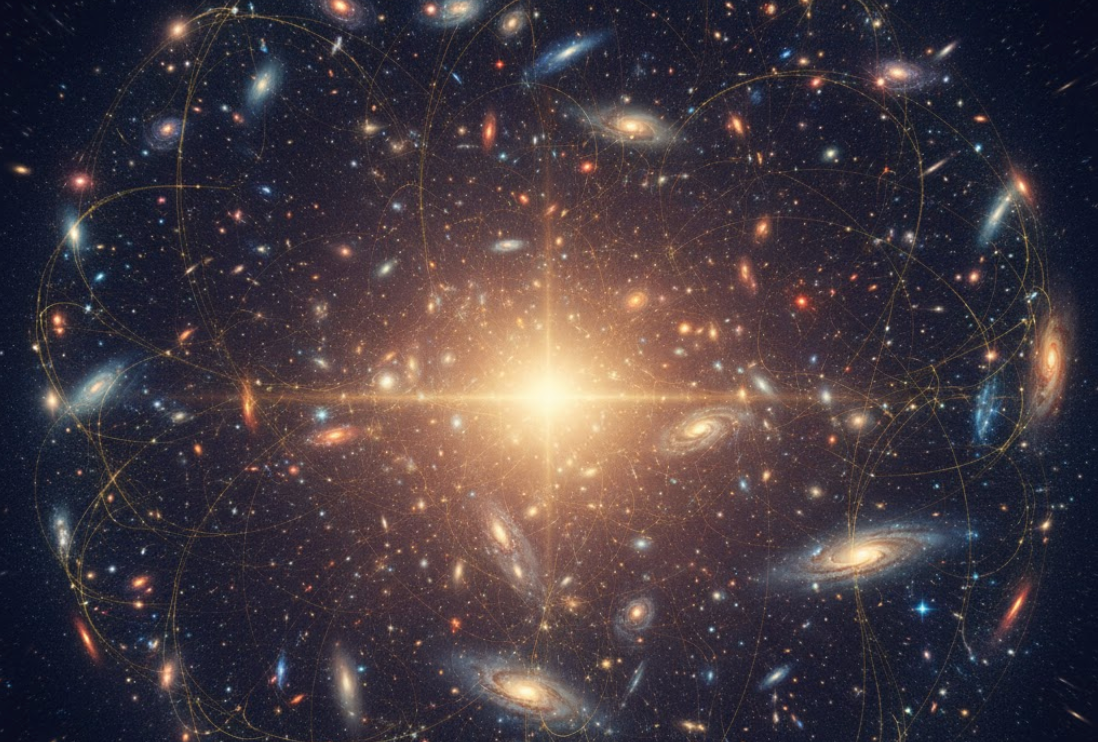
“You see, I am the center of the universe. People love to say, ‘The world doesn’t revolve around you.’ Adorable. True for planets—Earth loops the sun, the sun twirls around some black-hole disco ball in the Milky Way. Astronomers win the participation trophy. But in an infinite, ever-expanding, perfectly even universe, every point is the center. Draw your sphere anywhere—congratulations, you’re it. Geometry agrees, physics nods. Copernicus demoted us; quantum mechanics quietly re-promotes the observer. And it’s not just geometry. I stand up, the world starts changing. I sit back down; it all starts rearranging. Air shifts, a butterfly in Africa tweaks its wingbeat, two weeks later a coastline files a complaint. I am a natural-disaster generator with excellent quads. Then there’s the quantum side of it all. Unobserved, everything that is, or rather could be, is nothing more than possibility soup. Look, and it picks a lane. When I’m not watching you, you’re Schrödinger’s intern—half answering emails, half vapor. The instant I look—pop—there you are, deliciously well-dressed. Douglas Adams saw it. The Total Perspective Vortex: built to shatter egos by showing your microscopic place in everything. Zaphod steps in and sees himself at the center. Unbothered. The machine wasn’t broken; it was calibrated. That’s me. When I shift in my chair, constellations somewhere scoot a nanometer or two. Twelve galaxies of astrologers curse my posture. And you’re the center of your universe too, I’m sure. Tonight, out of infinity, your universe crash-landed into mine and mine wandered into yours. That’s two winning lottery tickets colliding mid-air and raising a glass to their good fortune. Most people never notice. They play unpaid extras in someone else’s film. But without your gaze, your scene isn’t a film at all—it’s blank tape waiting for a lead. Here’s the only non-symmetric rule I’ve found: if everyone is the center, then meaning lives in the way centers interact. How they treat each other. Kindness is the only physics that survives a change of frame. So do me a favor: don’t blink too long. Every time you stop looking, half the room collapses back into raw probability. It’s a heavy load to bear when you stop to think about it. Ah. Our table is ready. After you, my dear.” Behind them, the exit sign flickered, then went dark.
By M. Andrew McConnell August 25, 2025
Before 2021, my relationship with social media was… minimal. A handful of posts on Instagram, mostly vacation shots or moments I wanted to remember. Facebook had more content, but that was mainly because I used it like a digital photo album. I’m older—so that was the thing back then. A place to store, not perform. Then came the book. When Get Out of My Head launched, I was told (wisely, I suppose) that I needed to “build my platform.” To grow an audience. Engage. Show up. And so I did. What started as a few thoughtful posts about ideas from the book became a steady stream of insights, photos, videos, and carousels. I genuinely enjoyed it at first. It felt like an extension of the work—connecting with others who were navigating similar struggles. It was meaningful. And it was fun. But sometime last year, I noticed something shift. I was on a walk with my daughter, and I caught myself composing a caption in my head while she was telling me a story. Not a long caption. Just a snappy one-liner to pair with the video I was thinking of capturing. And that was the moment it clicked: I was no longer simply living. I was posting about living—in real time. My internal dialogue had started to narrate life through the lens of shareable content. Every moment became potential material. And that realization hit harder than I expected. I didn’t like what it was doing to me. Not just to my time or attention, but to the way I experienced joy, beauty, or even stillness. Everything was being filtered through a “how will I share this?” lens. I had gone from presence to performance. From living in the moment to scripting it. So maybe you noticed—my posts began to shift. They got less personal. More focused on ideas, frameworks, business. In part, that was intentional. I was trying to reclaim some part of my life that felt like it had slipped away. But even in that shift, something still didn’t sit right. It started to feel like I was performing productivity. Writing about the work of Alively more than actually doing the work. Posting about the concepts that inspire me more than letting them shape me. Creating carousels instead of creating momentum. And all of that takes time. Not just the logistical time of crafting a post, but the mental space—the headspace it rents. And that time has to come from somewhere. That somewhere, for me, was the space I need to be present. With my family. With my work. With myself. So, here we are. This is my last blog post for the foreseeable future. I’m stepping back. Not in protest. Not in burnout. Just in quiet clarity. Maybe I’ll write fiction again, just for me. Maybe I’ll continue reflecting on these ideas—presence, purpose, boundaries—but I won’t post about them. At least not now. I want to see where this goes, when I’m not living it out loud. I started all of this—posting, writing, sharing—because I believed that the things I was thinking about might be things others were struggling with too. That was the real gift of Get Out of My Head . Hearing from readers, from you, that these ideas resonated. That you were also navigating the tension between doing and being, between showing up and staying sane. That meant the world to me. But lately, I’ve started to feel like I’m just shouting into the social echo chamber. Unsure if I’m helping anyone… other than a few trillion-dollar companies that thrive on clicks, likes, and the illusion of connection. And that’s not what I want to feed. So this is me signing off. Not forever, maybe. But for now. I’m choosing presence over posting. Depth over reach. Living the work, rather than talking about it. Thank you—for reading, for walking alongside me, for being part of this journey. Truly. I’m grateful for every message, every thoughtful comment, every quiet “that sounds like me too” you’ve shared. So long, and goodbye—for now. —Andrew
By M. Andrew McConnell August 12, 2025
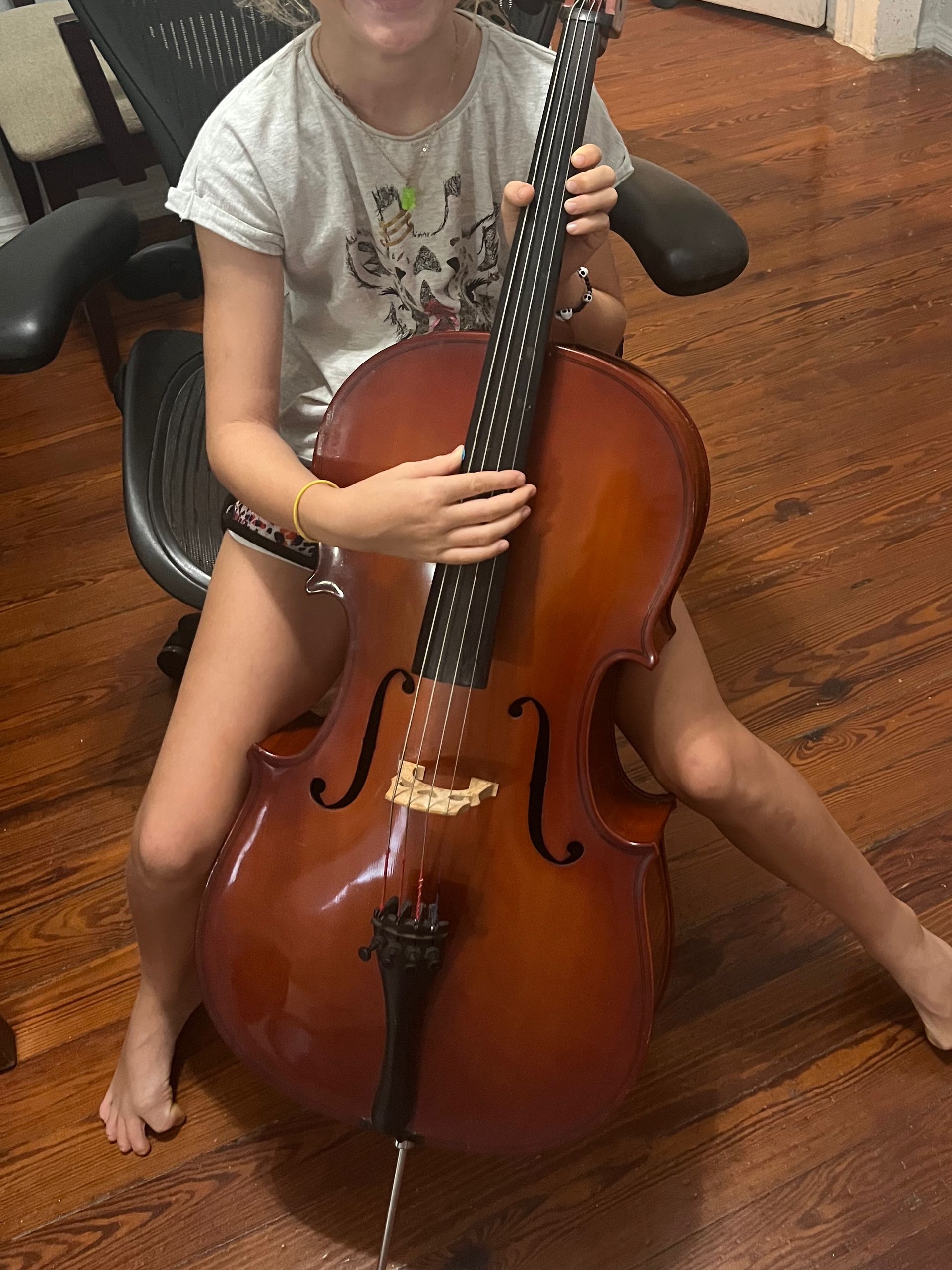
“Matilda’s sick again,” Talulla tells me with deep concern, cradling her cello as if it were a beloved pet needing urgent care. It’s one of the most unintentionally profound things I’ve ever heard her say. Matilda is not a person. Matilda is Talulla’s cello—a sweet, warm-toned wooden instrument that’s practically a family member at this point. And when Talulla says she’s sick, what she really means is: Matilda’s out of tune. And she’s right. You can hear it immediately when a cello isn’t tuned properly. It wobbles. It warbles. The harmony that once rang so easily becomes jarring. It’s not broken—it just needs attention. A little adjustment here. A twist of the peg there. And with care, it sings again. There’s something deeply human about this process. The way Matilda constantly needs tuning is not so different from the way we need retuning in our lives—physically, emotionally, mentally. But unlike a cello, we often wait too long to admit we’re off-key. Minor Adjustments, Major Impact With instruments, it doesn’t take much to fall out of tune. Just playing it can do it. A shift in weather. A bump on the car ride home. Matilda doesn’t need an overhaul—she just needs small, regular attention to stay aligned. And it’s the same with us. Daily life naturally nudges us off center. A stressful day at work. One night of poor sleep. A few skipped workouts. Slowly, we drift from our best selves, often without realizing it. Until something sounds—or feels—off. The key isn’t waiting for a full breakdown. The key is maintenance. Micro-adjustments. Checking in early and often, rather than reacting late and hard. The Danger of Delaying the Tune When Matilda is “sick,” Talulla now recognizes the signs. She knows something’s not right, and she tells someone. That small awareness allows for small fixes. But what happens if we don’t catch it? With instruments, the longer they go untuned, the harder it becomes to bring them back. The strings stretch too far, the pegs get stuck, and suddenly you’re not adjusting—you’re repairing. The same goes for us. Ignore the sore back long enough, and it’s not just a twinge—it’s an injury. Keep pushing through the burnout, and you’re not just tired—you’re lost. Preventative care may not feel dramatic, but it’s where long-term harmony lives. It’s easy to write off small signs: the tension in your jaw, the shortened patience with loved ones, the creeping fatigue. But these are the body’s equivalent of a flat string. They’re not flaws. They’re invitations to pause, recalibrate, and return to alignment. Listening Is a Skill—One I Had to Relearn One of the hardest things about keeping our own “instrument” in tune is this: we can’t always hear ourselves clearly. At least, not at first. And in my case, I trained myself not to listen. As a competitive swimmer in my youth, tuning out pain wasn’t a liability—it was a skill. You learned to ignore what your body was saying, to push harder, to silence the internal warning systems so you could perform. That mindset helped me compete, but it also led to injury. And a shorter career. Decades later, I still find myself having to unlearn that old programming. Now, I’m trying to hear again. To notice when something’s off. To respect it instead of override it. Listening to your body isn’t soft—it’s wise. It's the path to longevity, not just performance. But like music, it takes practice. We Don’t Have to Tune Alone Here’s another lesson Matilda teaches us: we don’t have to do this alone. Talulla is still learning how to play, let alone tune her instrument. She’s not expected to figure it out solo. She goes to her teacher. Someone who’s done it for years. Someone who knows how to listen differently and adjust with confidence. We need the same kind of support. Most of us were never taught how to listen to our bodies, manage our stress, or optimize our energy. But there are professionals who do know: — A primary care doctor who sees the patterns. — A physical therapist who notices the imbalance before it becomes injury. — A functional medicine doc who finds what’s off at the root. — A nutritionist who knows what your body might be asking for. — A trainer who sees how you move and what that says about your strength or alignment. You don’t have to be the expert. But you do have to show up. Ask for help. Stay curious. And most importantly—keep coming back for the tune-ups. Becoming Your Own Apprentice Over time, Talulla will learn how to tune Matilda herself. She’ll still go to her teacher, but she’ll also learn to trust her own ear. She’ll make mistakes—tighten when she should’ve loosened—but she’ll improve. And that’s our job too. We don’t start out knowing how to take care of ourselves. We learn. Slowly. Through journaling, through trial and error, through body scans and bloodwork and maybe even breakdowns. But the more we listen, the more we trust. The more we trust, the more we adjust. We may never be concert-level soloists when it comes to our health or our work-life balance, but we don’t need to be. What we need is presence. Practice. And the willingness to keep showing up with our metaphorical tuning pegs. A Symphony in Progress Matilda still gets “sick.” And she will for as long as she’s played. But Talulla is getting better at noticing it early. She doesn’t panic—she tunes. That’s the goal for all of us. We don’t need to be perfectly in tune at every moment. But we can notice when things feel a little off. We can pause. Adjust. Ask for help. Learn something new. And play again. Life isn’t a one-time performance. It’s an evolving symphony. One that takes constant maintenance and loving attention. You don’t need a new life. You might just need a tune. What’s one small area in your life that could use a little re-tuning this week?  Start there. Start small. And start now.
By M. Andrew McConnell July 28, 2025
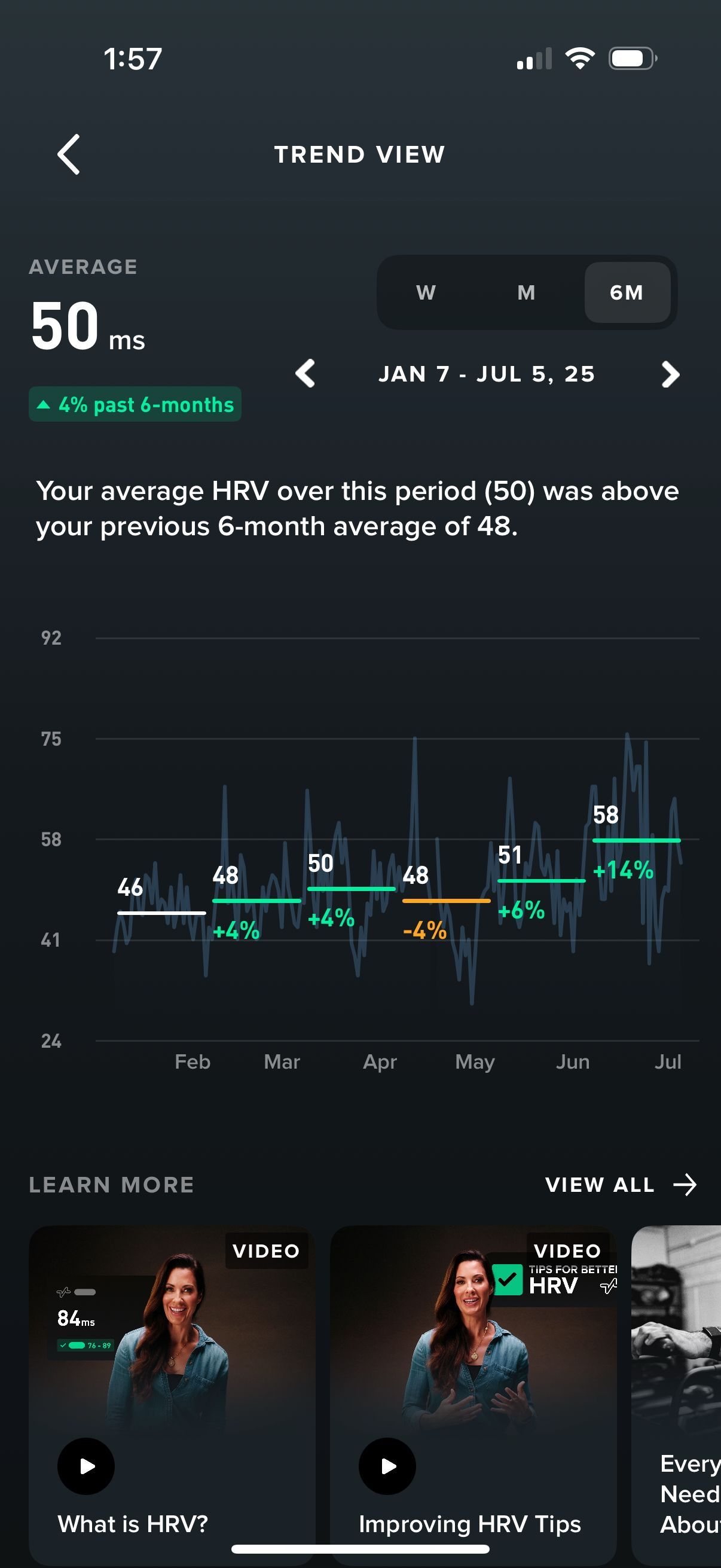
For years, I told myself a quiet lie: that rest was for other people. You know, the ones who weren’t “disciplined” enough. The ones who needed to recharge. Not me. I was the kind of person who got after it. I didn’t miss workouts. I pushed through fatigue. I wore my consistency like a badge of honor. And the irony? I knew better. I’ve read the research. I’ve heard the experts say it again and again: rest and recovery are just as essential as training . They’re one of the five foundational pillars of healthspan—right up there with fitness, nutrition, stress management, and social connection. On paper, I understood it. But in practice, I always treated rest like a luxury I hadn’t earned yet. That mindset finally started to shift thanks to a few wake-up calls—some subtle, some less so. It started with reading more deeply into the research. Then there was a post from Peter Attia, going from the same intellectual “knowing” I had to a true internalized realization thanks to a forced period of rest. Friends and loved ones would gently (and sometimes not-so-gently) encourage me to build in more space, to chill a bit. But if I’m being honest, I still didn’t do anything about it. It wasn’t until I recorded an episode of the Home of Healthspan podcast with Dylan Gemelli that something clicked. I don’t even remember the exact thing he said, but I remember how it landed. For whatever reason, it stuck. And that week, for the first time in I don’t know how long, I took a true rest day. No “active recovery.” No sneaky cardio. Just rest. And here’s where it gets interesting: my HRV (Heart Rate Variability) started improving almost immediately. Quick definition, in case you’re unfamiliar: HRV is the measure of the variation in time between your heartbeats. A higher HRV means your nervous system is in a more adaptable, recovered, and resilient state. Lower HRV? You’re likely stressed, overtrained, or under-recovered. It’s not a perfect metric, but it’s an incredibly helpful window into how your body is really doing. From February to July of 2025, I saw a steady climb in my HRV—month after month. From 47 to 55. That’s a 20% improvement, simply from one rest day a week and a little more attention to recovery. But the real lesson—the one that forced me to actually understand rest—came after an operation this summer. The procedure itself wasn’t major, but the post-op instructions were crystal clear: no physical activity for two full weeks . Anything more than the absolute basics risked ripping internal stitches. So for the first time in years, I stopped cold. Here’s what happened: Week one? My HRV soared. I was waking up with scores in the high 60s and even hit 70. My body was soaking up the total rest like a sponge. It was confirmation that I’d been carrying a huge load, and finally giving my system time off allowed it to rebound beautifully. But then… week two hit. And my HRV crashed. High 30s. Low 40s. Worse than it had been even during my overtraining phases. It was baffling at first. I wasn’t doing anything, and yet my body was responding like I was under major stress. Until I realized: rest only works when it follows effort . I’d gone from sustained high-output weeks to a full-stop, and that first week of recovery made sense. But by the second week, the pendulum had swung too far. I didn’t need more rest—I needed the return of rhythm, of effort, of challenge. Once I resumed physical activity—carefully at first—my HRV climbed again. It’s now steady in the mid to high 50s. Not peaking, but strong. Balanced. Here’s the thing I finally, truly get: rest isn’t about doing nothing—it’s about doing the right amount for the work you’re doing . Too much work? You burn out. Too much rest? You fade. It’s a dance. A cycle. Stress, recover, adapt. Repeat. We love to glorify the grind, but it’s in the recovery that we actually get stronger. Muscles rebuild. Hormones reset. Your nervous system regains its footing. Without rest, there is no growth. Without work, there’s nothing to recover from. You need both. And this doesn’t just apply to training. It’s true in work, relationships, even creativity. We all need to find our version of the sweet spot—where we’re challenged enough to grow, but rested enough to handle it. So here’s what I’d offer, if you’re someone who leans hard into effort and tends to see rest as a kind of weakness: Start small. One true rest day a week changed my physiology more than I imagined. Track something. HRV worked for me, but even basic journaling—energy, sleep, mood—can show you patterns. Rest when you're well, not just when you’re wrecked. Recovery is not a reward for burnout. It’s maintenance for your engine. I wish it hadn’t taken an operation to learn this. But sometimes, life hands you a lesson so clearly you can’t look away. And now? Rest isn’t a compromise. It’s strategy. Here’s to getting stronger—by slowing down, just enough.
By M. Andrew McConnell July 21, 2025
Imagine spending $2 million a year just to stay young. That’s not a sci-fi plot — that’s Brian Johnson’s real life. He’s the guy who made headlines for building a full-time medical team, tracking his organs with more tests than an entire hospital wing, and living on a strict diet of green sludge and personalized supplements — all in the name of living longer. It’s easy to roll our eyes. But it also raises a pretty uncomfortable question: Is living longer and healthier becoming a privilege reserved for the ultra-wealthy? Is longevity just the latest luxury — a wellness playground for those who can buy their way out of aging? And if so… where does that leave the rest of us? The Biohacking Boom: A Playground for the Wealthy? Walk through any trendy health podcast or Instagram reel these days and you’ll find no shortage of people selling the dream of “biohacking.” Fancy wearables that track your sleep stages. Hyperbaric oxygen chambers you can install in your basement. Personalized IV drips, peptides, nootropics, cold plunges, red light therapy — the list goes on and on. And sure, there’s some fascinating science in there. But there’s also a booming industry behind it — one that loves to position longevity as something you need to buy to achieve. Brian Johnson might be the poster boy for this idea — reportedly dropping over $2 million every year on tests, doctors, supplements, and gadgets. But he’s far from alone. The wellness market is stuffed with people ready to sell you the latest “hack” — a $300 stress device here, a $500 supplement stack there. Here’s the thing: about 20% of Americans have true discretionary income — money left over after covering essentials. That leaves a lot of people just trying to pay rent, keep the lights on, and put food on the table. Meanwhile, the narrative around longevity can start to feel pretty elitist — like a secret club for those who can afford to chase an extra decade of life with high-tech toys. The Big Secret: Healthspan Doesn’t Have to Cost a Fortune But here’s what the fancy marketing rarely admits: you don’t need millions — or even thousands — to get most of the benefits that help you live longer and better. No red light bed required. No custom peptide injections. Not even a gym membership if you don’t want one. Most of the biggest longevity boosts come from the same simple, free (or cheap) habits that people have known for decades — but too often overlook in the chase for the next shiny hack. Move your body vigorously: You don’t need a Peloton or a boutique class. Do 20 push-ups on your bedroom floor. Squat until your legs burn. Run up and down your stairs. Research shows that going from no movement to some movement brings massive gains in lifespan and quality of life. Eat enough protein and whole plants: The protein helps preserve muscle, which is a huge predictor of healthy aging. And the fiber and nutrients in plants? They protect your gut, heart, and brain. You don’t need a $60 greens powder — start by aiming for 800 grams (about 6-7 cups) of fruits and vegetables daily. Sleep eight hours: No fancy mattress or sleep app can replace the basics. Turn off the screens, cool the room, and protect your bedtime like it’s a million-dollar secret — because it kind of is. And hey, maybe canceling a streaming subscription is the easiest longevity “hack” you’ll ever try. Breathe: You can pay for fancy apps and devices, sure. But one study found that a simple, free breathing exercise called the “physiological sigh” — just a double inhale through your nose, then a slow exhale — can calm your nervous system in minutes. Five minutes a day can work better than guided meditation. Connect with people: Maybe the most underrated free longevity tool we have. Human connection is protective. Say hello to the cashier, chat with your neighbor, call a friend. Five to ten small, genuine interactions a day do more for your mental and physical health than you might ever measure with a wearable. The Everyday Longevity Hero Need proof that this isn’t just theory? Meet Julie Gibson Clark — a single mom who decided she wanted to live as long and well as possible. Her “longevity routine” costs her about $108 a month — that’s it. She focuses on a vegetable-rich diet, some basic supplements, regular exercise, and meditation. No full-time medical team. No billion-dollar bank account. Just consistency. Julie’s story is powerful because it shows that you don’t have to buy into the lie that health is only for the wealthy. She proves you can choose basics over gadgets — and still stack the odds in your favor. Everyone Deserves a Long, Alively Life So yes — there are a thousand ways to spend money chasing health. And sure, if you’ve got millions, go ahead and experiment with fancy blood tests and custom infusions. But don’t let anyone convince you that your vitality is out of reach without them. Healthy, vibrant, “ Alively ” living (to borrow a word I love) is not for the few. It’s for all of us. We just have to reclaim it from the marketers and the influencers telling us we need to spend our way there. Sometimes the simplest actions are the most radical: moving your body, eating real food, sleeping deeply, breathing well, and staying connected to the people around you. These cost next to nothing — and yet they’re priceless. So, What’s Holding You Back? The ethics of longevity is a big conversation. But the first step is remembering that the most powerful tools are not locked behind velvet ropes. They’re here for you, today, right where you are. So if you’ve ever felt like healthy aging is for “other people” — the ones with better jobs, bigger houses, or $2 million health budgets — please know this: the door is open for you too. Go for a walk tonight instead of another episode. Text a friend. Take a deep breath. And know that, yes — you really do deserve to live a long, healthy, meaningful life.
By M. Andrew McConnell July 7, 2025
In an age obsessed with novelty, repetition can feel… boring. We crave the new workout plan, the new diet hack, the new productivity method that promises overnight transformation. But here’s the quiet truth: real change rarely arrives in a flash. More often, it’s built in silence—through small actions repeated with intention, day after day, year after year. Discipline and ritual get a bad rap. Some see them as shackles—restrictions that box in our freedom. But the irony is, the right routines don’t limit you. They free you. And the science backs it up. The Science of Small, Consistent Steps Big, dramatic moves—like crash diets or jumping from zero exercise to two-hour workouts every day—make great headlines. But research shows they rarely stick. In his book Atomic Habits , James Clear distills decades of behavioral research into one simple idea: small habits, repeated consistently, compound into remarkable results. He writes, “Every action you take is a vote for the person you wish to become.” The votes don’t have to be huge—just steady. B.J. Fogg, a behavior scientist at Stanford, teaches the same through his Tiny Habits Method: lasting change starts with actions so small you can’t fail. When they’re easy, you repeat them. When you repeat them, they become identity. And in 2009, a study by Phillippa Lally published in the European Journal of Social Psychology found that, on average, it takes 66 days to make a behavior automatic. Not one heroic effort—66 days of small repetitions. So while bold transformations are tempting, they rarely last. It’s the quiet consistency that changes who you are. Rituals Shape Identity When you commit to small, repeated actions, you’re not just changing what you do—you’re changing how you see yourself. Think about your own rituals: your morning walk, your daily journaling, your regular workouts, your mindful bedtime wind-down. These aren’t random tasks. They’re anchors. Each repetition is a tiny reminder: I’m someone who cares for my body. I’m someone who makes time for stillness. I’m someone who keeps promises to myself. This is how repetition becomes transformation. Not by forcing you into a box—but by giving you an identity you trust. Discipline Is Freedom, Not a Cage Here’s the paradox: the more discipline you have, the more freedom you gain. Jocko Willink, a Navy SEAL turned author, says it best: “Discipline equals freedom.” It sounds harsh until you realize what he means—discipline frees you from chaos, distraction, and decision fatigue. A 2011 study in the Journal of Personality and Social Psychology found that people with strong self-control don’t constantly resist temptation—they avoid it by automating their choices. They build routines that run on autopilot. They spend less energy deciding, because the decision has already been made. When you repeat good actions by default, you free your mind to focus on what truly matters: your work, your relationships, your purpose. The 80/20 Principle of Rituals: Be Consistent, Not Perfect But here’s where people get stuck: they think discipline means perfection. It doesn’t. True discipline lives in the 80/20 rule: if you follow your rituals 80% to 90% of the time, you get nearly all the benefit and the freedom to loosen the reins for the other 10%–20%. Look at Tim Ferriss’s Slow Carb Diet: he famously built “cheat days” into the plan. Not as failures, but as part of the system. Or consider athletes: they schedule rest days because recovery is part of growth. If you train hard every single day, you break down. If you rest with intention, you build back stronger. Life will test your routines. You’ll travel. You’ll have family emergencies. You’ll celebrate holidays. You’ll hit seasons of burnout or unexpected surgeries (like I did recently). Not long ago, I had an operation that took me completely out of my normal groove—no swimming, no lifting, not even my daily stretching and mobility practice. It rattled me. Was I worried about losing momentum? Of course. But it also reminded me that discipline isn’t a prison. In that season, letting go of my routine was the discipline. Pushing would have set me back. Pausing was how I kept faith with the bigger goal: long-term health. So here’s the truth: your rituals are powerful, but they’re not stone tablets. They’re tools. The goal isn’t perfect streaks forever—it’s meaningful consistency over time. Seasonality: Know When to Hold On, Know When to Let Go A wise routine respects the seasons of your life. Sometimes you tighten your grip. Sometimes you loosen it. Maybe work or family needs more from you for a while. Maybe you’re traveling, grieving, healing, or simply living. Rituals should adapt to serve your life, not the other way around. Discipline, at its best, isn’t rigidity—it’s discernment. The skill isn’t just in doing your rituals, but in knowing when to break them, when to return, and when to evolve. Repetition Is How We Become When you strip it all down, repetition is not redundant. It’s how we become. There is quiet power in doing the same meaningful things, well and often. In showing up for yourself not just once in a burst of motivation, but over and over again, when nobody’s watching. That’s where depth lives. That’s where the big changes hide. So embrace your routines. Love your discipline. Use them to shape your days—and, piece by piece, your identity.  But remember: do it for the life you want. And never let your rituals become the walls that keep you from living it.
By M. Andrew McConnell June 30, 2025
There’s a certain beauty in the quiet things we do each day. The 6 a.m. walk before emails begin. The decision to skip the drive-thru and make something fresh. A moment of stillness before bed. They don’t feel groundbreaking. But they echo—sometimes for decades. We often think of longevity as a gift granted to a lucky few—people with “good genes.” But what if living longer—and better—wasn’t about chance, but about the ripple effect of today’s smallest choices? Superagers: Proof That It’s Not Just in Your DNA In the book Superagers, the research is clear: it’s not just genetics that determine who thrives in their 80s and 90s. In fact, only about 20–30% of our lifespan is determined by genes. The rest? It’s lifestyle, mindset, and the way we show up each day. These “superagers” aren’t elite athletes or lottery winners of the genome. They’re people who make movement a daily habit. Who engage socially and stay mentally curious. Who work their bodies and brains consistently—not perfectly, but persistently. What these studies revealed is powerful: the way we live shapes the way we age. And the best part? It’s never too late to start. The Healthcare Echo: What Our Choices Cost Let’s talk numbers. In the U.S., nearly 1 in every 5 dollars in our economy is spent on healthcare. That’s about $4.5 trillion annually. Of that staggering total, 90% goes to chronic and mental health conditions —many of which are preventable and often reversible through lifestyle changes. Yes, reversible. Conditions like type 2 diabetes, hypertension, heart disease, and certain autoimmune disorders have all shown dramatic improvement—or even full remission—through sustained changes in nutrition, movement, sleep, and stress management. That means the ripple of our collective habits isn’t just biological—it’s financial. Our daily choices, multiplied across millions, shape not just our bodies but our budgets and society at large. This is not about blame. It’s about opportunity. Today’s Choices Echo Forward I like to think of every habit as a pebble tossed into a still lake. The effect might seem small now. But over time, those ripples stretch out wider than we ever imagined. A 20-minute walk each day might not feel heroic. But stack that over 30 years? You’re looking at thousands of hours of cardiovascular health, better mood, stronger joints, and more resilient longevity. Cooking a simple, whole-food dinner might not feel Instagram-worthy. But do it consistently and you’re changing your gut health, metabolism, energy, even your cognitive function. Sleep, stress management, strength training, hydration, laughter, friendships—these aren’t just “nice to haves.” They’re foundational. They are the long-game investments that compound over time in the most valuable asset we’ll ever own: ourselves. The Superager Blueprint So what do the superagers actually do differently? Here’s what the research—and real life—shows: They move daily. It’s not about marathons. It’s about movement: walking, dancing, lifting, stretching. They stay mentally engaged. They learn languages, play music, read, challenge their thinking. They connect. Loneliness is as dangerous as smoking. Superagers cultivate deep relationships. They have purpose. They wake up with a “why,” whether it’s family, service, or curiosity. They don’t retire from life. Many keep working or volunteering well into their 80s and 90s. These habits don’t just keep people alive. They keep them vibrant. Capable. Present. A Mindset Shift: From Fixing to Building Too often we treat health reactively—waiting until something breaks before we fix it. But longevity requires a builder’s mindset. The superagers didn’t stumble into strength. They laid the bricks one habit at a time. And that’s the invitation. To stop seeing habits as chores, and start seeing them as blueprints. As personal architecture. As investments in the person we’re becoming. Your habits today are the foundation your future self will stand on. What Will Your Echo Sound Like? Pause and reflect: What’s one habit I’m practicing today that my 80-year-old self will thank me for? What belief am I holding that says “it’s too late” or “too hard” to change? How can I make my long-term well-being part of my daily rhythm, not just a New Year’s resolution? This isn’t about perfection. It’s about consistency. It’s about choosing, again and again, to honor the future you. Because the echo is already forming. Your Future Self Is Listening In 10, 20, or 40 years, you will become the result of what you practiced—not occasionally, but regularly. You’ll carry the benefits of sleep routines, strength training, a joyful plate, and purpose-filled days. Or you’ll feel the burden of their absence. The good news? That future is not fixed. You shape it today—with every step, every bite, every breath. So take the walk. Choose the greens. Call the friend. Learn the thing.  Small ripples. Big echoes.